Electromagnetic emissions are fundamental to vehicle compliance, product reliability, and safety in today’s complex automotive environment. As vehicles incorporate more power electronics, electronic control units (ECUs), communication modules, electric propulsion systems, and infotainment networks, the potential for electromagnetic interference (EMI) increases dramatically. If unmanaged, these emissions can disturb other electronic systems within the vehicle and in neighbouring equipment, leading to functional failures, safety hazards, or regulatory rejection.
Automotive EMC testing is the structured process used to characterize and control unwanted electromagnetic energy radiated or conducted by vehicles and their subsystems. This article explains the relevant standards, test methods, measurement considerations, and implications for design and compliance.
Why Automotive Emissions Matter
A vehicle’s electromagnetic emissions can:
• Interfere with safety critical systems such as anti lock braking (ABS), electronic stability control (ESC), or advanced driver assistance systems (ADAS)
• Disrupt on board wireless services such as GPS, cellular, and vehicle to anything (V2X) communications
• Affect nearby vehicles or infrastructure
• Introduce noise into diagnostic or sensor networks
Effective emissions control is essential for regulatory approval and functional safety. Foreign markets, OEM integration requirements, and supplier contracts increasingly rely on emissions performance as a formal part of system acceptance.
Regulatory Frameworks and Core Standards
Automotive emissions testing is governed by internationally recognized standards and regulatory references. These standards define measurement limits and ensure repeatable test methodologies across accredited laboratories.
UN ECE Regulation R10
UN Economic Commission for Europe Regulation No. 10 provides a harmonized baseline for automotive EMC compliance. R10 is widely adopted in Europe and referenced in many other jurisdictions as a foundation for vehicle and electronic sub assembly approval. It includes both emissions and immunity requirements, forming a complete compliance regime for type approval programs.
CISPR Emissions Standards
The International Special Committee on Radio Interference defines practical measurement procedures and limit lines used in automotive emissions testing.
CISPR 12
CISPR 12 is the primary standard for vehicle emissions. It describes measurement geometries, test environments such as semi anechoic chambers and open area test sites, transducers and receivers, and conducted and radiated emissions limits. Its purpose is to protect off board receivers such as broadcast radio and communication systems from excessive electromagnetic energy emitted by vehicles.
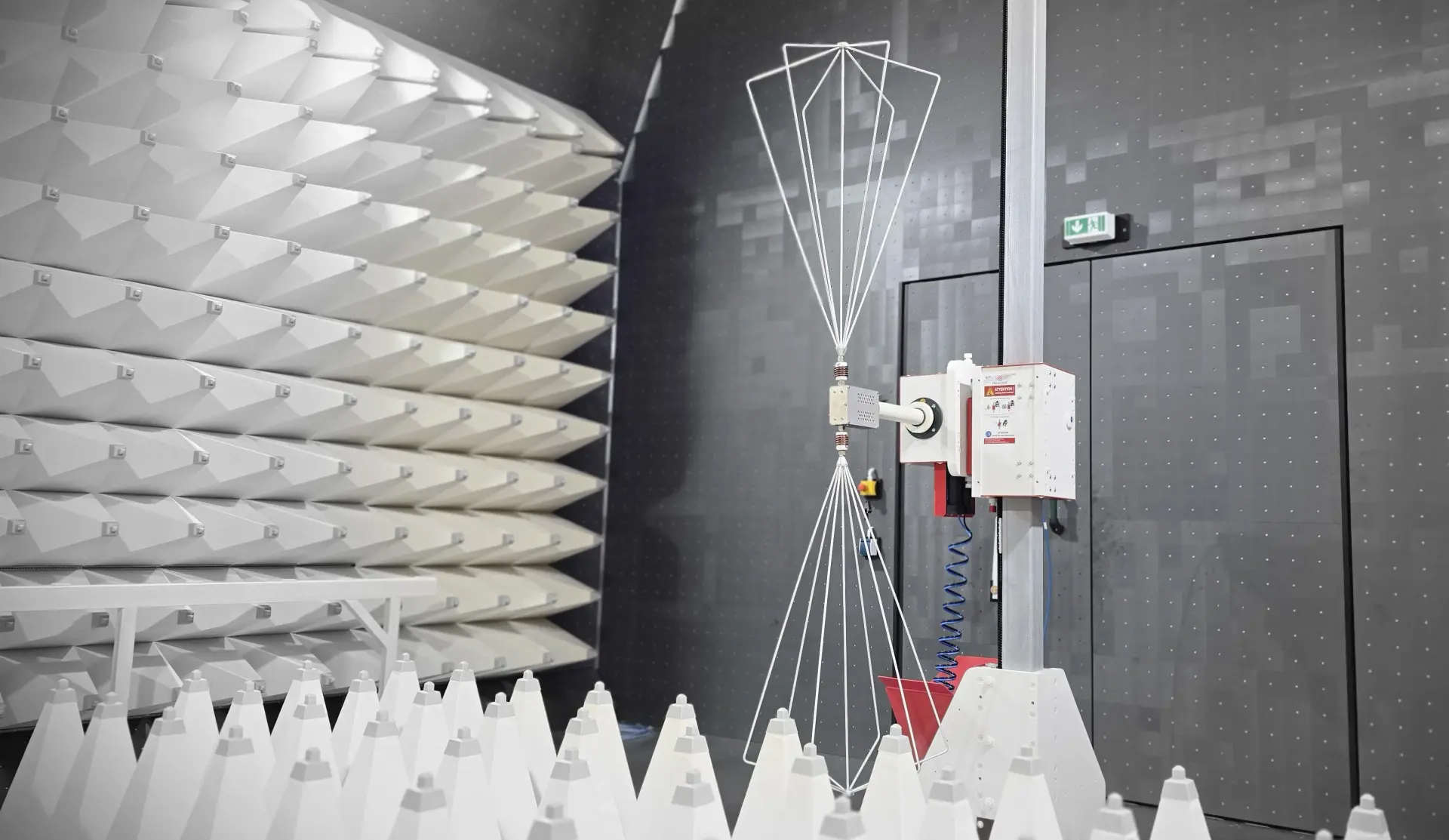
At automotive EMC testing facilities, conducted emissions are measured on power lines using Line Impedance Stabilization Networks. Radiated emissions are measured with calibrated antennas at specified distances in controlled enclosures.
CISPR 25
CISPR 25 focuses on protection of on board receivers such as telematics modules and GPS systems. It includes stricter measurement methods for internal noise sources and emphasizes conducted emissions directly injected into harnesses and modules. Many OEMs use CISPR 25 as a supplier qualification baseline.
Measurement Environments and Site Requirements
Semi Anechoic Chambers
Semi anechoic chambers use RF absorbers to simulate free space conditions while maintaining reflective ground planes. They are widely used for radiated emissions up to several GHz and provide repeatable and low noise measurement environments.
Open Area Test Sites
Open area test sites approximate free space conditions outdoors and are suitable for certain large vehicle measurements where chamber constraints may apply.
Regardless of site type, calibration, ambient noise evaluation, and consistent geometry are essential for defensible compliance measurements.
Conducted and Radiated Emissions
Conducted Emissions
Conducted emissions are unwanted noise currents and voltages propagating along electrical conductors such as power leads and harness bundles. These are evaluated using LISNs and probes over defined frequency bands. Filtering, grounding, shielding, and harness design strongly influence results.
Radiated Emissions
Radiated emissions are electromagnetic fields that propagate through space from circuits and cables. They are measured using calibrated antennas at standardized distances and are sensitive to wiring geometry and PCB layout practices.
Test Procedures and Data Analysis
Effective emissions testing requires defining worst case operating modes, correlating test conditions with real world use, maintaining calibration traceability, and performing uncertainty analysis. Results are presented as amplitude versus frequency plots compared against CISPR limit lines. Pass or fail status depends on maintaining emissions below defined limits in all operating states.
Design Controls That Influence Emissions
Emission performance is strongly influenced by design decisions including cable routing, shield implementation, point of load filtering, ground architecture optimization, and PCB return path control. Addressing these factors early improves first pass success rates and reduces costly redesign cycles.
OEM and Market Expectations
Many OEMs mandate compliance to CISPR 12 or CISPR 25 with acceptance criteria stricter than regulatory minimums. Suppliers frequently perform both component level and vehicle level emission assessments before integration. Understanding these expectations early supports smoother supply chain approval.
For a broader overview of requirements and integration strategy, see our detailed guide on vehicle electromagnetic compatibility regulatory compliance and practical implementation.
The Importance of Early and Structured Testing
Waiting until late development stages to perform emissions testing increases the risk of redesign and schedule delays. A structured automotive EMC strategy integrates early pre compliance measurements with formal verification programs.
Conclusion
Automotive EMC emissions testing is a rigorous and standards driven process requiring controlled environments, accurate instrumentation, engineering integration, and disciplined procedures. With vehicles integrating more electronics and wireless systems than ever before, emissions control is essential not only for compliance but also for vehicle performance, safety, and customer satisfaction.
To discuss your next project, visit Stancer Testing Lab and explore our comprehensive automotive compliance services.
Related Articles