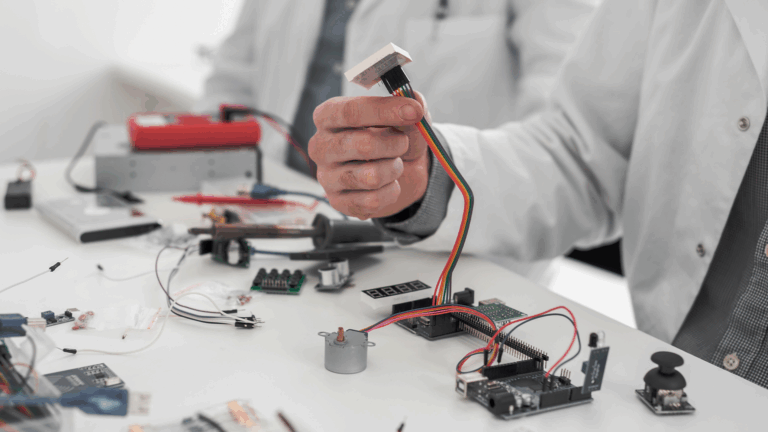

A critical step in bringing electrical and electronic products to the European market is compliance with Electromagnetic Compatibility (EMC) requirements. EMC performance ensures that devices operate without generating excessive electromagnetic disturbances, and that they maintain functional integrity when exposed to interference from their surroundings. In the European Union, regulatory compliance is facilitated through a system of harmonized standards which serve as recognized technical benchmarks under the regulatory framework.
When a product conforms to relevant harmonized standards, manufacturers can presume conformity with essential regulatory requirements. This enables affixing the CE marking and supports market placement across the EU without additional technical barriers. If you need support with test planning or execution, our EMC testing services, RF testing services, radiated emission testing, conducted emission testing, radiated immunity testing, and ESD testing can help streamline compliance.
Understanding EU Harmonized Standards for EMC and Product Compliance
The Regulatory Framework in the EU
The core EU regulation governing EMC is the EMC Directive (2014/30/EU), which defines essential requirements for electromagnetic emissions and immunity. The directive applies to most electrical and electronic equipment placed on the EU market, with few exceptions (for example, certain medical devices and automotive components may be regulated under other specific directives or regulations).
In addition to the EMC Directive, many products must also comply with other regulatory frameworks that reference harmonized standards for safety, low voltage performance, radio equipment, and interoperability:
• Low Voltage Directive (LVD 2014/35/EU): Covers electrical safety for products within defined voltage ranges
• Radio Equipment Directive (RED 2014/53/EU): Applies to devices with intentional radio transmitters and receivers
• Machinery Directive (2006/42/EC): Includes requirements for electromagnetic immunity where machinery safety is affected
• RoHS Directive (2011/65/EU): Restricts hazardous substances in electrical and electronic products
Manufacturers typically compile a Technical Construction File (TCF) that includes declarations of conformity, test reports, risk assessments, and design documentation demonstrating compliance with applicable directives and harmonized standards.
What Are Harmonized Standards?
Harmonized standards are European technical specifications developed by recognized standards bodies such as CENELEC and ETSI and published in the Official Journal of the European Union. They translate the essential requirements of directives into specific test methods, measurement procedures, and performance criteria.
By aligning product design and testing with harmonized standards, manufacturers achieve presumption of conformity, meaning regulatory authorities generally accept that compliance with these standards satisfies the essential legal requirements of the applicable EU directives.
EMC Related Harmonized Standards
EN 61000-6 Series — Generic EMC Standards
The EN 61000-6 series covers generic product environments and performance criteria that apply across a broad range of product types:
• EN 61000-6-1: Immunity for residential, commercial, and light industrial environments
• EN 61000-6-3: Emission limits for similar environments
• EN 61000-6-2: Immunity requirements for industrial environments
• EN 61000-6-4: Emission limits for industrial environments
Understanding the installation environment is crucial, as many devices must be tested under conditions reflecting their intended use (for example, industrial floor, office space, or outdoor installation).
EN 61000-3 Series — Emission Limits and Measurement
The EN 61000-3 family establishes limits and methodologies for conducted and voltage fluctuation phenomena, particularly for grid connected equipment:
• EN 61000-3-2: Limits harmonic current emissions generated by electrical and electronic equipment
• EN 61000-3-3: Limits voltage fluctuations and flicker
• EN 61000-3-11 and EN 61000-3-12: Harmonic and flicker limits for larger equipment
Devices connected to the public supply grid must meet these standards to prevent adverse impacts on power quality and network reliability. If your product requires power quality compliance work, we can support through EMC testing planning and validation.
Product Specific EMC Requirements
In addition to generic standards, many product categories have tailored standards that address their unique electromagnetic profiles and operational functions. Examples include:
• EN 55032: Multimedia equipment emissions
• EN 55035: Multimedia equipment immunity
• EN 301 489 series: EMC requirements for radio equipment under the Radio Equipment Directive
• EN 61326: Electrical test and measurement instruments
• EN 60601-1-2: Medical electrical equipment EMC requirements
Product specific standards coexist with generic families; manufacturers must identify all relevant harmonized standards applicable to their product type.
Integrating EMC Standards Into Product Design and Validation
Risk Based Assessment
Effective EMC compliance begins with a thorough risk assessment that considers intended use environment, electromagnetic threat profiles, safety and functional criticality, and interactions with other electronic systems. Risk assessment informs test plans, helps prioritize design controls, and supports documentation in the Technical Construction File.
Pre Compliance Evaluation
Early EMC pre compliance evaluation helps identify areas of vulnerability before formal validation, reducing project risk and development costs. Common tools include near field scanning for emission hotspots, simulation of transient phenomena using surge and EFT generators, shielding effectiveness checks, and power line disturbance analysis.
Pre compliance work helps engineering teams iterate on grounding strategies, shielding placement, filtering networks, and cable routing before submitting for full certification. If you want support, we can start with targeted radiated emission testing and conducted emission testing pre scans.
Formal EMC Validation
Formal validation against harmonized standards typically requires an accredited test facility with a controlled environment, calibrated instrumentation and antennas, reproducible test configurations, and documented procedures and acceptance criteria.
Validation commonly includes radiated emissions, conducted emissions, radiated immunity, ESD, and transient immunity such as surge and EFT, depending on the applicable product standard.
Declaration of Conformity and Technical Documentation
Once testing is complete, manufacturers prepare a Declaration of Conformity (DoC) asserting that the product meets applicable EU directives and harmonized standards. The DoC typically includes product identification, applied harmonized standards, manufacturer name and address, notified body information if applicable, and the signature of an authorized representative.
Supporting documentation within the Technical Construction File must be available for inspection by market surveillance authorities and usually includes test reports, design records, and risk assessments.
Market Surveillance and Ongoing Compliance
EU member states conduct market surveillance to verify conformity. Products may be sampled and evaluated against claimed standards. Non compliant products can be withdrawn from the market, mandated for corrective action, or subject to enforcement measures.
Maintaining an up to date compliance posture, including tracking revisions to harmonized standards, is essential for ongoing market access and brand reputation.
Harmonized Standards and Global Convergence
Although harmonized EU standards are specific to European regulatory frameworks, many align with international IEC standards, facilitating global market entry. Mapping harmonized standards to global counterparts supports efficient design strategies that meet multiple regional requirements without redundant testing.
Summary
EMC harmonized standards form the technical backbone of regulatory compliance in the European Union. By integrating these standards into design, testing, and documentation, manufacturers can achieve presumption of conformity with EU directives, access the European market through CE marking, mitigate interference related risk, ensure product performance in real operating environments, and streamline regulatory and supply chain acceptance.
A disciplined EMC approach rooted in risk assessment, pre compliance evaluation, and formal validation is essential for success in increasingly electromagnetically complex markets. If you would like help building a practical test plan or running validation, contact Stancer Testing Lab for EMC testing and RF testing support.
Related Articles