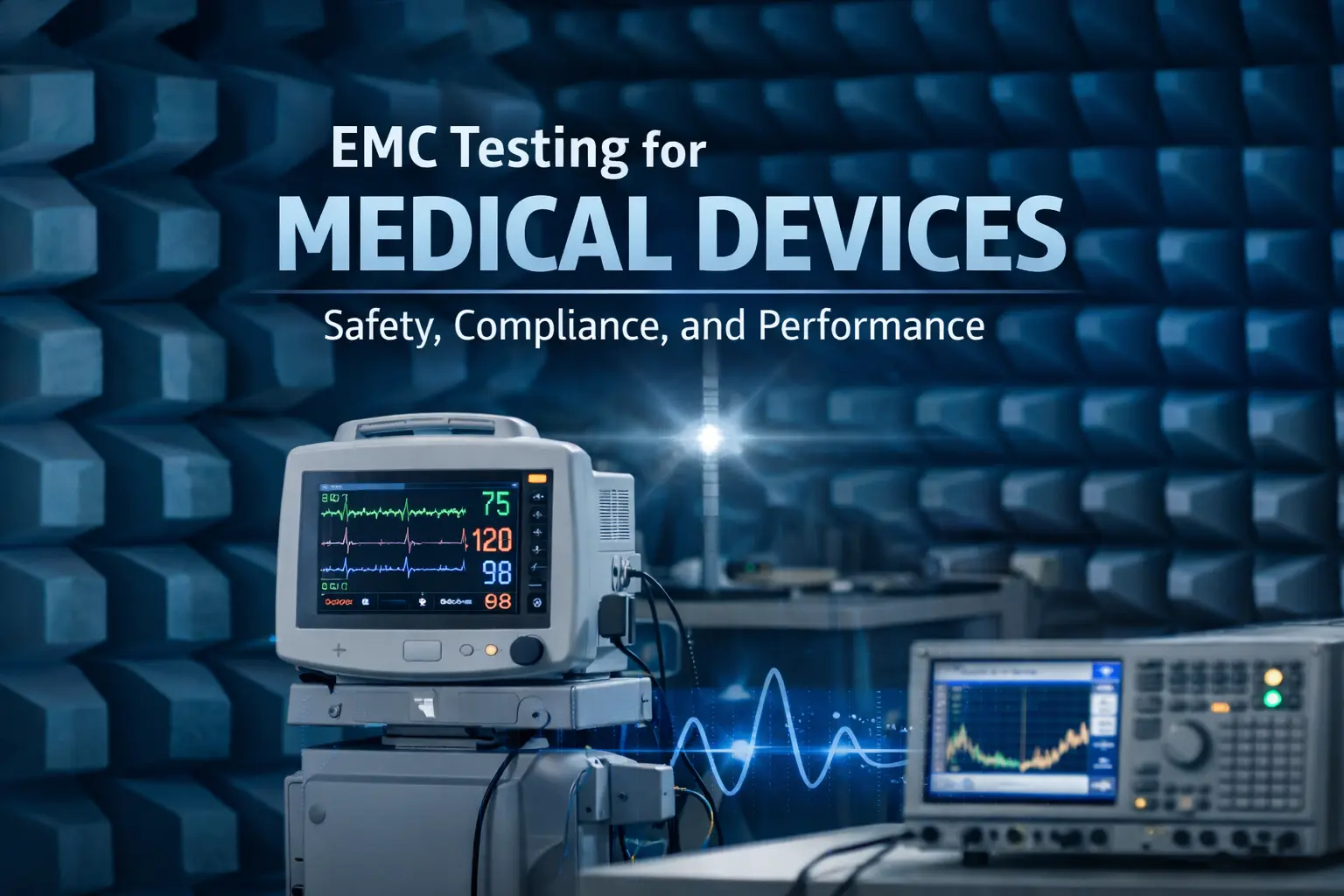
Electromagnetic Compatibility (EMC) testing is a fundamental requirement in the development and certification of medical devices. As modern healthcare systems increasingly rely on interconnected, electronically complex technologies, medical equipment must perform reliably in challenging electromagnetic environments—without disrupting nearby devices or compromising patient safety.
Understanding EMC Testing
EMC testing examines how a medical device behaves in the presence of electromagnetic energy, both as a source and as a recipient. All electrically powered medical devices generate electromagnetic emissions; if uncontrolled, these emissions can interfere with other critical equipment such as patient monitors, infusion pumps, or imaging systems. At the same time, devices must remain immune to external electromagnetic disturbances common in hospitals, including wireless communications, power electronics, and industrial machinery. In medical applications, EMC performance is not just a quality issue—it is directly tied to safety, risk management, and regulatory approval.
Key Standards Governing Medical EMC
The internationally recognized reference standard for EMC testing of medical electrical equipment is IEC 60601-1-2 (Edition 4.1). This standard defines emission limits and immunity requirements for medical devices, including in vitro diagnostic (IVD) equipment. It addresses a comprehensive range of tests, such as radiated and conducted emissions, electrostatic discharge (ESD), radiated and conducted immunity, electrical fast transients, surge immunity, magnetic field exposure, as well as harmonics and flicker. Compliance with IEC 60601-1-2 is mandatory for most global markets and forms a critical part of CE marking in Europe and regulatory submissions in North America and Asia.
What EMC Testing Covers
EMC evaluation typically includes both emissions and immunity assessments. Emissions testing verifies that electromagnetic noise generated by the device remains below permitted levels, preventing interference with other equipment. Immunity testing exposes the device to controlled electromagnetic disturbances to confirm safe and stable operation under real-world conditions. Additional tests such as ESD simulate static discharges from human interaction, while surge and transient testing evaluates resilience to power disturbances in accordance with IEC 61000-4-series standards.
Why EMC Testing Matters for Medical Devices
Patient safety is the primary driver behind EMC requirements. In environments like operating rooms and intensive care units, multiple electronic devices operate simultaneously and in close proximity. EMC testing ensures that a medical device will neither disrupt other life-supporting systems nor malfunction due to external interference. Beyond safety, EMC compliance is essential for regulatory acceptance across global markets and helps manufacturers avoid costly redesigns, certification delays, and unexpected failures during audits. Demonstrated compliance also enhances product credibility and reinforces trust among healthcare providers and distributors.
From Testing to Certification: A Practical Approach
Formal EMC compliance testing is performed on production-representative hardware in fully controlled, shielded test environments using calibrated instrumentation. These conditions allow accurate measurement of emissions and precise determination of immunity thresholds. Many experienced laboratories also support manufacturers through pre-compliance evaluations, gap analyses against applicable standards, and technical consulting throughout the design and certification process—helping identify and resolve EMC risks early.
Design Considerations for Medical Device Developers
Incorporating EMC requirements early in product design and risk management can significantly reduce development time and cost. Clear documentation of EMC performance is essential for regulatory submissions, and devices incorporating wireless technologies should also account for wireless coexistence considerations. Proactive EMC planning leads to smoother certification and more robust products.
Conclusion
EMC testing is a cornerstone of medical device safety, reliability, and regulatory readiness. By thoroughly validating electromagnetic behavior, manufacturers not only achieve compliance but also ensure dependable operation in the demanding environments where patient care depends on technology every day.
Related Articles